Quick Answer: Can You Repair an Off-Road Tire with a Tire Plug?
Yes. A tire plug can temporarily repair most tread-area punctures caused by nails, screws, or trail debris. A tire plug can often get you safely back on the road or trail, but it should be inspected by a professional tire repair shop as soon as possible. Tire plugs should never be used to repair sidewall damage or large tire tears.
When you’re miles from pavement, a flat tire can quickly turn a great adventure into a frustrating situation. At TNT Customs in Cheyenne, Wyoming, we’ve seen how a simple tire plug kit can save an off-road trip and get drivers safely back to civilization.
Knowing how to perform a basic tire repair is one of the most valuable skills any off-roader can learn.
Do You Need a Full-Size Spare Tire?
Absolutely.
While tire plug kits are incredibly useful, they should never replace carrying a full-size spare tire. Tire plugs work well for many punctures, but they cannot repair every type of tire damage.
If you experience:
- Sidewall damage
- Large punctures
- Tire blowouts
- Damaged bead seals
- Multiple punctures close together
A tire plug likely won’t solve the problem.
A full-size spare tire remains your best backup plan when exploring remote trails around Wyoming, Colorado, or anywhere far from roadside assistance.
Why Tire Plugs Are Better Than Tire Sealants
Many drivers reach for liquid tire sealants because they’re easy to use. However, sealants can:
- Create a mess inside the tire
- Complicate future professional repairs
- Potentially damage Tire Pressure Monitoring System (TPMS) sensors
- Make tire balancing more difficult
A quality tire plug kit provides a cleaner and more reliable temporary repair for most common punctures.
What You Need in Your Tire Plug Kit
Every off-road vehicle should carry a tire repair kit along with an air source.
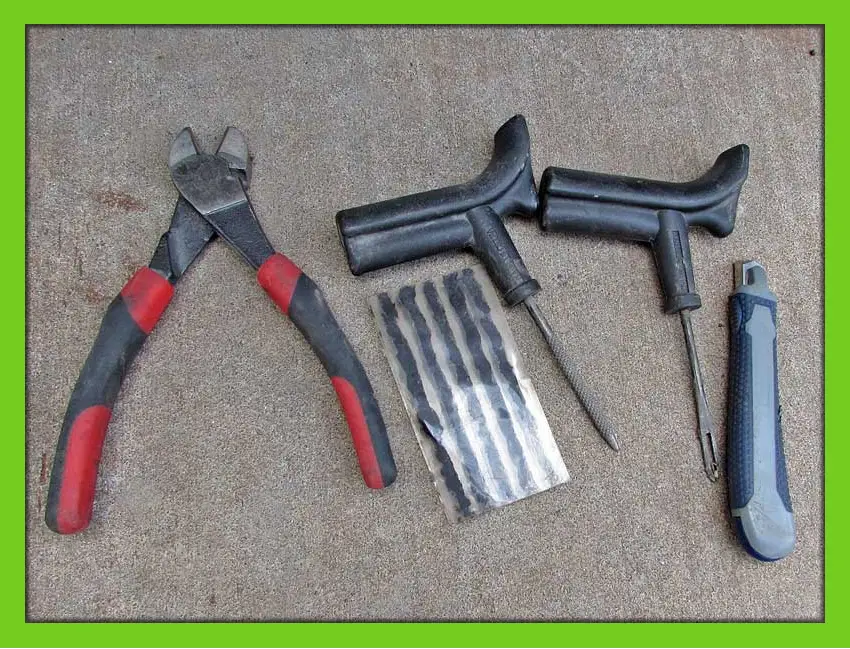
Essential Tire Repair Tools
- Tire plug kit with plugs
- Tire plug insertion tool
- Tire reamer tool
- Needle-nose pliers or side cutters
- Portable 12-volt air compressor
- Tire pressure gauge
- Soapy water (for locating leaks)
Some tire repair kits also include rubber cement, which can help improve the seal, although many modern plugs work effectively without it.
Step-by-Step: How to Plug a Tire on the Trail
Step 1: Find the Leak
If you can’t immediately see the puncture, spray the tire with soapy water.
Look for bubbles forming around the damaged area. The bubbles will pinpoint the leak location.
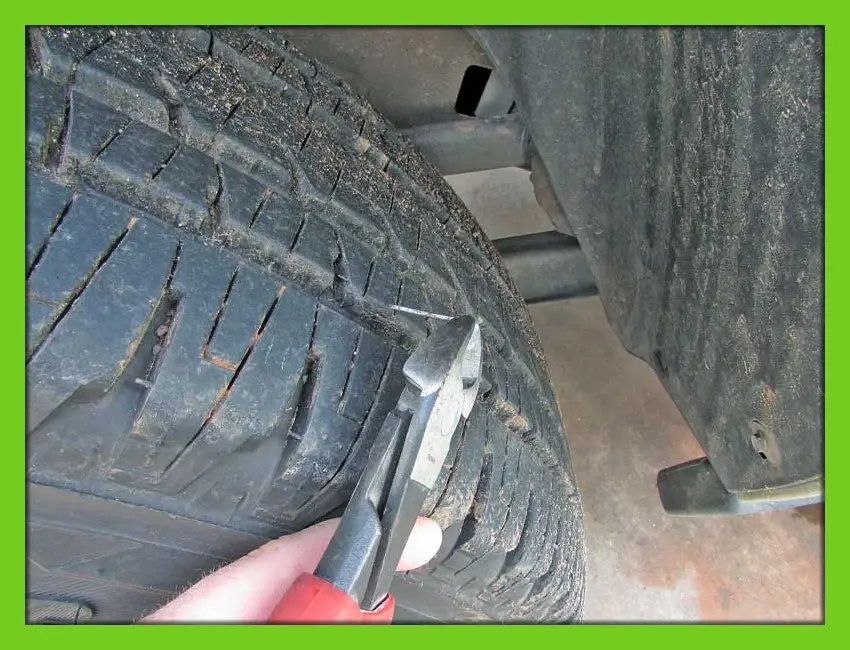
Step 2: Remove the Object
Using pliers or side cutters, carefully remove the nail, screw, or debris from the tire.
Try to note the angle at which the object entered the tire. This will help when inserting the plug.
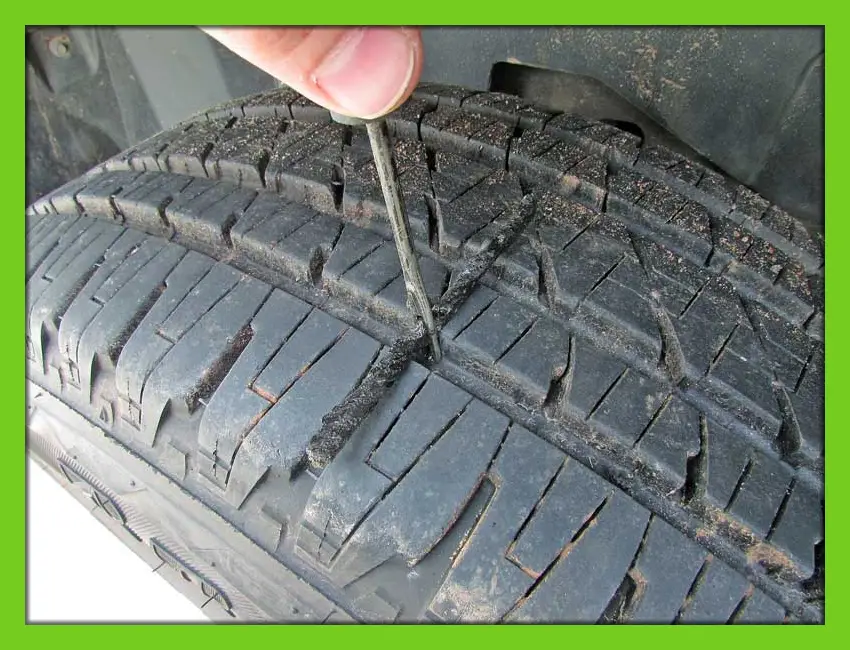
Step 3: Prepare the Puncture
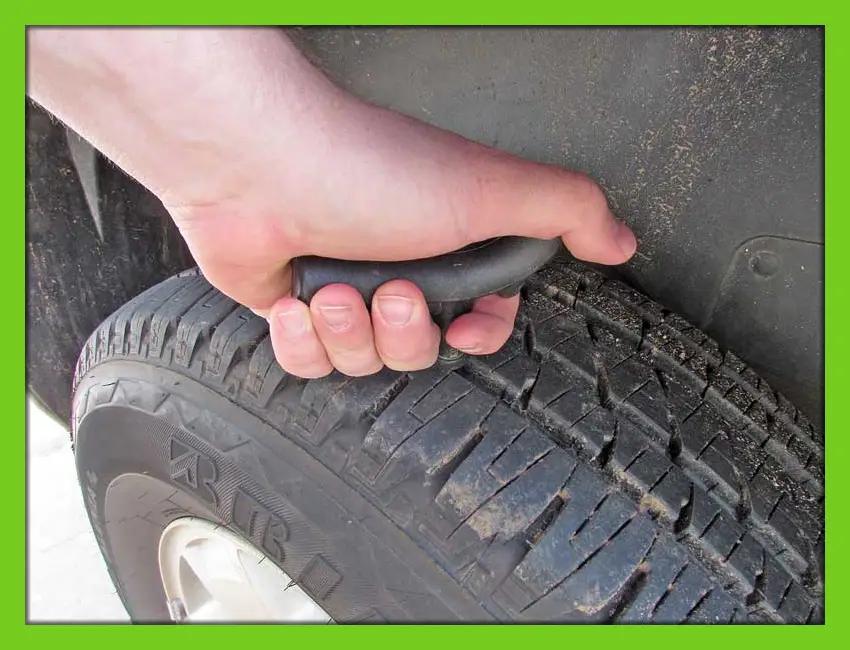
Insert the reamer tool into the hole.
Use a twisting motion while pushing the tool through the puncture. Move it in and out several times to clean and prepare the hole for the plug.
This step is important because it creates a uniform opening that helps the plug seal properly.
Step 4: Load the Tire Plug
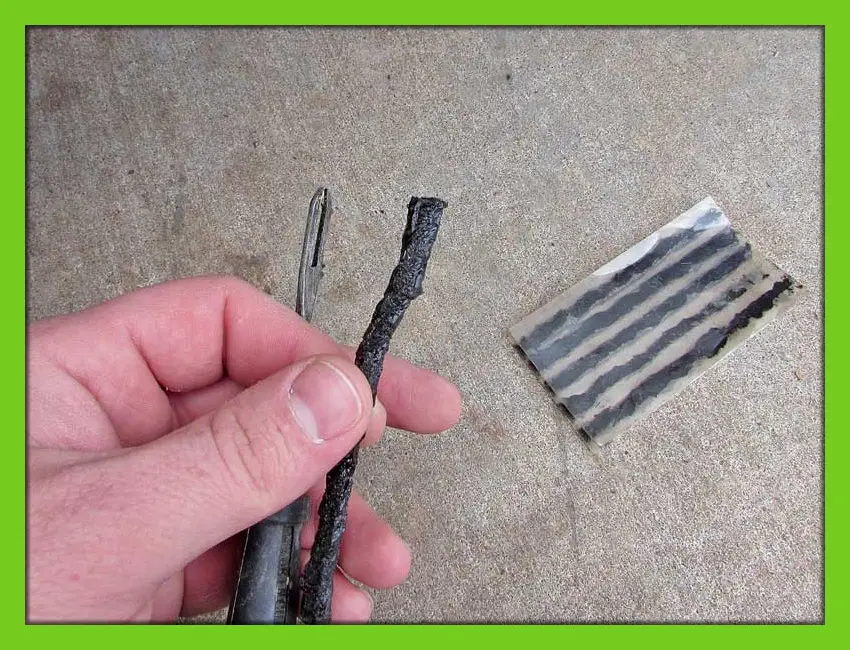
Thread the tire plug through the eye of the insertion tool.
Pull the plug halfway through so both sides are even.
If using rubber cement, apply it to the plug before installation.
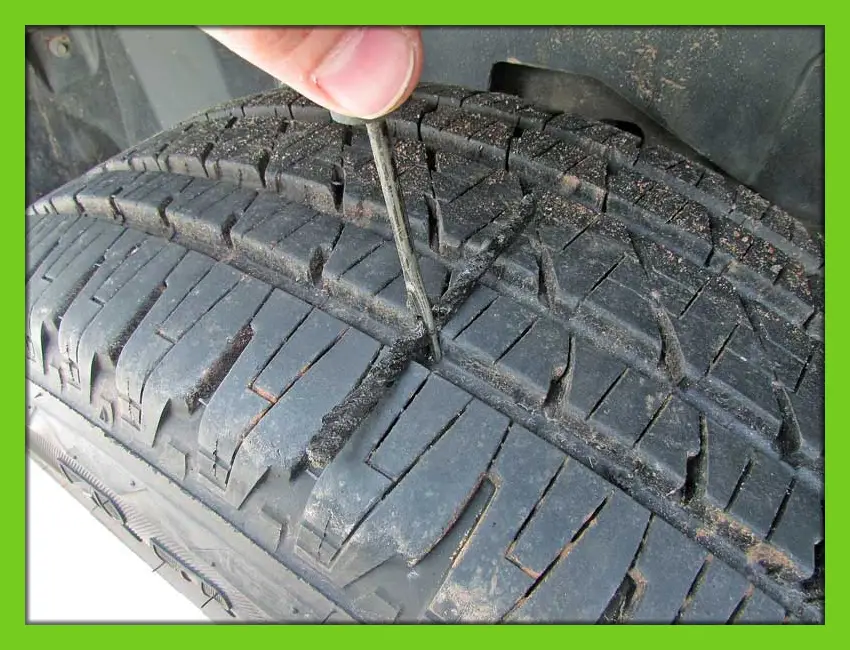
Step 5: Insert the Plug
Push the insertion tool into the puncture until approximately three-quarters of the plug is inside the tire.
Twist the tool slightly and pull it straight out.
The plug should remain in the tire while the tool slides free.
Step 6: Inflate the Tire
Use your portable air compressor to refill the tire to the manufacturer’s recommended PSI.
Check the repair with soapy water to ensure no air is escaping.
If bubbles continue to form, repeat the repair process with another plug.
When Should You Replace a Tire Instead of Plugging It?
A tire plug should not be used when:
- The puncture is in the sidewall
- The tire has a large cut or tear
- Internal tire damage is suspected
- The puncture exceeds repairable size limits
- The tire has suffered a blowout
In these situations, replacing the tire is the safest option.
Professional Tire Repair in Cheyenne, WY
At TNT Customs, we help Wyoming drivers stay safe both on and off the road. Whether you need a tire inspection, tire replacement, TPMS service, suspension upgrades, or off-road vehicle maintenance, our experienced technicians can help.
A tire plug can get you back to civilization, but having the repair professionally inspected afterward is always recommended for long-term safety.
Essential Advice for Every Off-Roader
Every off-roader should carry a tire plug kit and know how to use it. Flat tires happen when you least expect them, often far from help.
A few minutes of preparation and the right tools can turn a trip-ending problem into a quick trail-side repair.
When combined with a full-size spare tire, portable air compressor, and basic recovery gear, a tire plug kit becomes one of the most valuable items in your off-road emergency kit.
Frequently Asked Questions
How long will a tire plug last?
A properly installed tire plug can last for thousands of miles, but it should still be inspected by a professional technician. Many manufacturers consider plugs a temporary repair.
Can you plug a sidewall tire puncture?
No. Sidewall damage cannot be safely repaired with a tire plug and typically requires tire replacement.
Is a tire plug better than Fix-a-Flat?
For most tread punctures, yes. Tire plugs provide a more durable repair and avoid many of the cleanup and TPMS issues associated with liquid tire sealants.
Should every off-roader carry a tire plug kit?
Absolutely. A tire plug kit, portable air compressor, and full-size spare tire are essential recovery items for any off-road vehicle.
Can I drive on the highway after plugging a tire?
A properly installed plug can often safely get you home or to a repair shop, but the tire should be professionally inspected as soon as possible.
What is the best air compressor for off-road tire repairs?
A quality 12-volt portable air compressor designed for truck and SUV tires is recommended. Look for a compressor capable of inflating larger off-road tires quickly and reliably.