A truck topper can completely change how you use your pickup. It can provide secure storage, protect your gear from the weather, create space for camping, or turn your truck into a more capable work or overland vehicle.
But not every truck topper is right for every truck or every owner.
Before choosing one based on looks or price alone, think about how you use your truck today and how you may want to use it in the future.
At TNT Customs in Cheyenne, Wyoming, we work with truck owners who use their pickups for everything from daily driving and jobsite duty to hunting, camping, and overlanding. Here are nine questions worth asking before you invest in a truck topper.
Quick Answer: What Should You Consider When Buying a Truck Topper?
Before buying a truck topper, consider how you’ll use it, the topper’s construction and weight, how much interior space you need, how you’ll access your gear, weather protection, accessory compatibility, future upgrades, and professional installation.
The best truck topper isn’t necessarily the most expensive option. It’s the topper that fits your truck, your gear, and how you actually use your pickup.

1. What Will You Use Your Truck Topper For?
This should be the first question you ask, because the answer affects nearly every decision that follows.
Are you primarily looking for:
- Secure everyday storage?
- Protection for tools and work equipment?
- Camping space?
- An overlanding setup?
- Hunting or fishing gear storage?
- Protection for pets?
- Additional cargo space for road trips?
- A combination of work and recreation?
Someone who wants to keep tools dry and secure may need a completely different topper than someone planning to mount camping equipment and spend weekends exploring Wyoming backroads.
Start with what you need your truck to do. Then choose the topper.
2. What Type of Truck Topper Is Best for You?
Truck toppers come in several different designs and materials, and each has advantages.
Fiberglass Truck Toppers
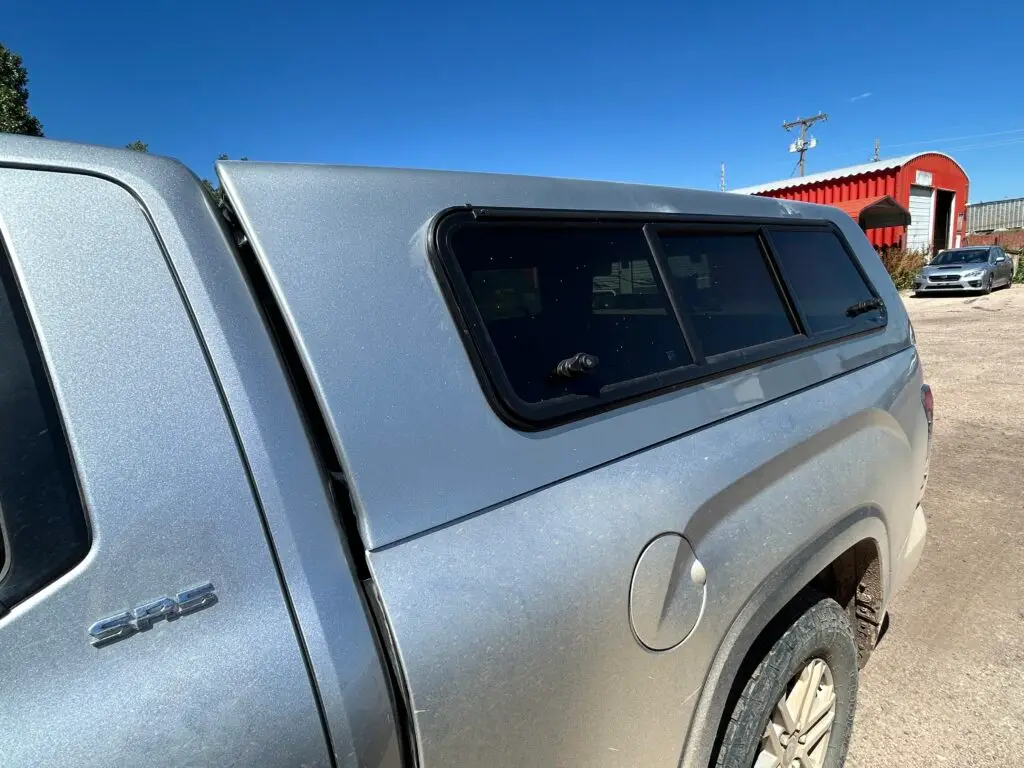
Fiberglass toppers are popular because they can provide a clean, finished appearance and may be paint-matched to the truck. They’re commonly used for everyday driving, recreation, secure storage, and camping.
Aluminum Truck Toppers
Aluminum toppers can be a great choice for work trucks, overland builds, and customers who prioritize durability, configurable storage, or lower weight depending on the design.
Modern aluminum toppers can also offer features such as large side-access doors, accessory panels, and mounting options designed around camping and overlanding.
Cab-Height vs. High-Rise Toppers
A cab-height topper maintains a lower-profile appearance and may be all the space you need for everyday cargo.
A high-rise topper provides additional interior height, which can make a significant difference if you’re carrying bulky equipment or building a camping setup.
There’s no universal winner. The right style depends on what you’re putting underneath and potentially on top of the topper.
3. How Much Weight Will the Topper Add to Your Truck?
Topper weight is an important consideration that’s sometimes overlooked.
Everything you add to a pickup contributes to its payload, including:
- The topper
- Passengers
- Tools
- Camping equipment
- Cargo
- Recovery equipment
- Aftermarket accessories
- Equipment mounted to the topper
Your truck has a specific payload capacity established by the manufacturer.
That becomes particularly important when you’re planning a more extensive overland or work-truck build. A topper might only be one component of the total setup.
TNT Tip: Think about the weight of the complete build, not just the topper you’re purchasing today.
4. How Much Interior Space and Headroom Do You Need?
It’s easy to underestimate how valuable a few additional inches of height can become.
If you’re only protecting groceries, luggage, or everyday cargo, a cab-height topper may provide plenty of room.
But if you’re planning to:
- Sleep in the truck bed
- Carry taller equipment
- Install storage systems
- Build a camping platform
- Transport large gear
…additional interior height may be worth considering.
Think about how you’ll actually move around and access equipment once the truck bed is loaded.
A topper can look spacious when the bed is empty. Add coolers, tools, totes, camping gear, and recovery equipment, and that space disappears quickly.
5. How Do You Want to Access Your Gear?
This is one of the most important and most overlooked questions when choosing a topper.
Imagine your truck bed completely loaded.
Can you reach the item sitting all the way behind the cab?
Traditional rear access may work perfectly for some owners. Others may benefit from:
- Side windows
- Sliding windows
- Side-access doors
- Large side openings
- Gull-wing-style doors
- Accessory panels
- Interior organization systems
Large side openings can be especially useful for work and overlanding because they allow you to reach equipment without crawling through the truck bed.
Some overland-style topper doors can even provide shade when open, creating another functional feature at camp.
Before buying, think about where your most frequently used gear will be stored and how you’re going to reach it.
6. Will the Topper Handle Wyoming Weather?
Here in Wyoming, this question deserves some extra attention.
Your truck topper may encounter:
Wind. Snow. Dust. Rain. Temperature swings. Highway driving. Dirt roads.
Construction quality matters, but proper fit and installation matter too.
When comparing toppers, consider:
- Sealing around openings
- Door and window construction
- Latches
- Mounting systems
- Overall construction
- Weather resistance
- How the topper attaches to your specific truck
It’s also important to have realistic expectations. A truck topper can provide excellent weather protection, but describing any topper as completely waterproof under every possible driving and weather condition can be misleading.
Proper installation and maintenance of seals can make a significant difference.
7. What Accessories Might You Want to Add Later?
You might only want a topper today.
Six months from now, you may have very different plans.
Before choosing a topper, consider whether you eventually want to add:
- Roof racks
- Crossbars
- Rooftop tent
- Awning
- Interior lighting
- Exterior lighting
- Storage systems
- Tool organization
- Recovery equipment
- Camping accessories
If you’re considering carrying equipment on top of the topper, pay particular attention to the manufacturer’s static and dynamic load ratings and approved mounting systems.
A topper that works perfectly for simple covered storage isn’t automatically appropriate for supporting a rooftop tent or other heavy roof-mounted equipment.
Planning ahead can prevent you from buying a topper today that limits your build tomorrow.
8. Will the Topper Work With Your Other Truck Accessories?
Your topper doesn’t exist in isolation.
Think about what is already installed on your truck and what you plan to add.
That could include:
- Spray-in bedliners
- Bed mats
- Bed storage systems
- Toolboxes
- Bed lighting
- Tailgate accessories
- Cameras
- Electrical accessories
- Roof racks
- Camping equipment
Compatibility should be considered before installation, particularly when you’re building a truck for multiple purposes.
This is one reason it’s helpful to talk through your entire plan with a truck accessory shop rather than purchasing each accessory independently.
A well-planned build should work as a system.
9. Who Will Install Your Truck Topper?
Buying the right topper is only part of the equation.
Proper installation helps ensure that the topper is correctly positioned, mounted, sealed, adjusted, and when applicable wired to the vehicle.
Depending on the topper and truck, installation may involve:
- Correct mounting hardware
- Proper alignment
- Weather sealing
- Door and hatch adjustment
- Brake-light wiring
- Interior lighting connections
- Checking clearances
- Final fitment inspection
Professional installation also gives you an opportunity to identify compatibility issues before they become frustrating problems.
What We Ask Customers Before Recommending a Truck Topper
When someone comes into TNT Customs looking for a topper, one of the first things we want to know isn’t necessarily what brand they want.
We want to know what they want their truck to do.
Questions like these help narrow down the right setup:
What truck do you have?
Make, model, year, and bed length all matter.
How do you use it?
Daily driver, work truck, camping rig, overlander, hunting truck or a little bit of everything?
What do you normally carry?
Tools and construction equipment require different storage than camping gear.
Do you need side access?
If you’re constantly reaching into the bed, this can dramatically change which design makes sense.
Are you planning a rooftop tent or roof rack?
We need to consider load ratings and mounting compatibility from the beginning.
What other accessories do you already have?
And perhaps most importantly:
What do you want this truck to become over the next few years?
That last question can save you from buying something you’ll outgrow.
Fiberglass vs. Aluminum Truck Toppers: Which Is Better?
Neither material is automatically better for everyone.
Fiberglass toppers can be an excellent choice for truck owners who prioritize a factory-style appearance, enclosed storage, traditional windows, and everyday versatility.
Aluminum toppers can be attractive for work, camping, and overland applications where weight, durability, configurable panels, large access openings, and accessory mounting are priorities.
Instead of asking “Which material is best?”, a better question is:
“Which topper best supports what I want to do with my truck?”
Truck Topper FAQs
Are Truck Toppers Worth It?
A truck topper can be worth the investment if you regularly need enclosed, weather-protected or more secure storage. They can also greatly expand the usefulness of a truck for work, camping, hunting, road trips, and overlanding.
Whether one is worthwhile depends on how you use your pickup.
Are Aluminum or Fiberglass Truck Toppers Better?
Neither is universally better. Fiberglass toppers often appeal to customers looking for a more traditional, paint-matched appearance, while aluminum toppers can offer advantages for work and overlanding applications. Compare construction, weight, access, load ratings, features, and intended use rather than choosing by material alone.
How Much Does a Truck Topper Weigh?
Truck topper weight varies significantly based on size, material, construction, truck-bed length, and installed options. Check the specifications for the exact topper you’re considering and factor that weight into your truck’s available payload.
Can You Put a Rooftop Tent on a Truck Topper?
Only if the topper and mounting system are designed and rated for the load. Check the topper manufacturer’s dynamic and static load ratings, as well as requirements for crossbars or racks, before mounting a rooftop tent.
Don’t assume that because a topper has a flat roof or roof rack that it can safely support any rooftop tent.
Are Truck Toppers Waterproof?
It’s better to think of most truck toppers as weather-resistant rather than absolutely waterproof. Proper fitment, seals, installation, maintenance, and weather conditions can all affect water intrusion.
Do Truck Toppers Improve Gas Mileage?
Adding a topper changes a truck’s aerodynamics and adds weight, but the effect on fuel economy varies by truck, topper, speed, driving conditions, and other factors. Don’t purchase a topper primarily because you expect a specific fuel-economy improvement.
Can a Truck Topper Be Removed?
Many truck toppers can be removed, but the difficulty varies considerably depending on their weight, mounting system, wiring, accessories, and overall design. If you expect to remove yours regularly, discuss that before choosing a model.
Can I Add Accessories to My Topper Later?
Often, yes, but this is something you should investigate before buying the topper. Roof-load ratings, accessory mounting systems, wiring provisions, and panel configurations can determine what you’ll be able to add later.
Find the Right Truck Topper for Your Truck
There isn’t one truck topper that’s right for everyone.
The best choice comes down to your truck, lifestyle, cargo, budget, and future plans.
At TNT Customs in Cheyenne, Wyoming, we can help you compare different topper styles and configurations based on how you actually use your pickup. Whether you’re looking for everyday covered storage, a work-truck setup, or the beginning of a complete overland build, we’ll help you think through the options before you buy.
TNT Customs offers truck topper options from A.R.E., Ranch, and WanderFox, giving us the ability to look at traditional truck caps as well as modern aluminum and overland-style topper configurations.
More Reading from TNT Customs
Looking for more ways to get the most out of your truck? Check out these helpful guides:
- How to Choose the Right Truck Topper: Learn what to consider when comparing topper styles, materials, features, and options.
- Do Truck Toppers or Tonneau Covers Improve Gas Mileage? Learn how covering your truck bed can affect aerodynamics and fuel economy.
- 7 Must-Have Truck Accessories: Explore practical upgrades that can make your truck more useful for work, travel, and everyday driving.
- Overlanding: A Beginner’s Guide to Adventure Travel: Thinking about turning your truck into an adventure rig? Start with the basics of building an overlanding setup.