You turn the key or push the start button and your vehicle won’t start. Maybe you hear clicking. Maybe the engine turns over slowly. Or the dashboard lights come on, but nothing else happens.
Is it the battery, starter, or alternator?
These parts work together, and their symptoms can overlap. Understanding the differences can help you describe the problem and avoid replacing a part that wasn’t causing it.
Quick Answer: Battery, Starter, or Alternator?
Slow cranking or rapid clicking often points to a weak battery or poor electrical connection. A single click without cranking can indicate a starter problem, but battery and cable problems can cause it too. A charging warning light while driving or repeated battery discharge can indicate a charging-system problem.
These are clues, not a diagnosis. Testing the battery, starting system, and charging system helps identify the actual cause.
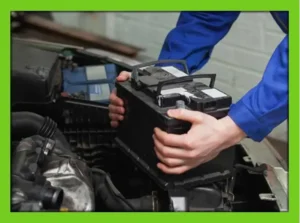
What Does Each Part Do?
| Component | Its job |
|---|---|
| Battery | Stores electrical energy and supplies power to start the engine. |
| Starter | Uses battery power to turn the engine so it can start. |
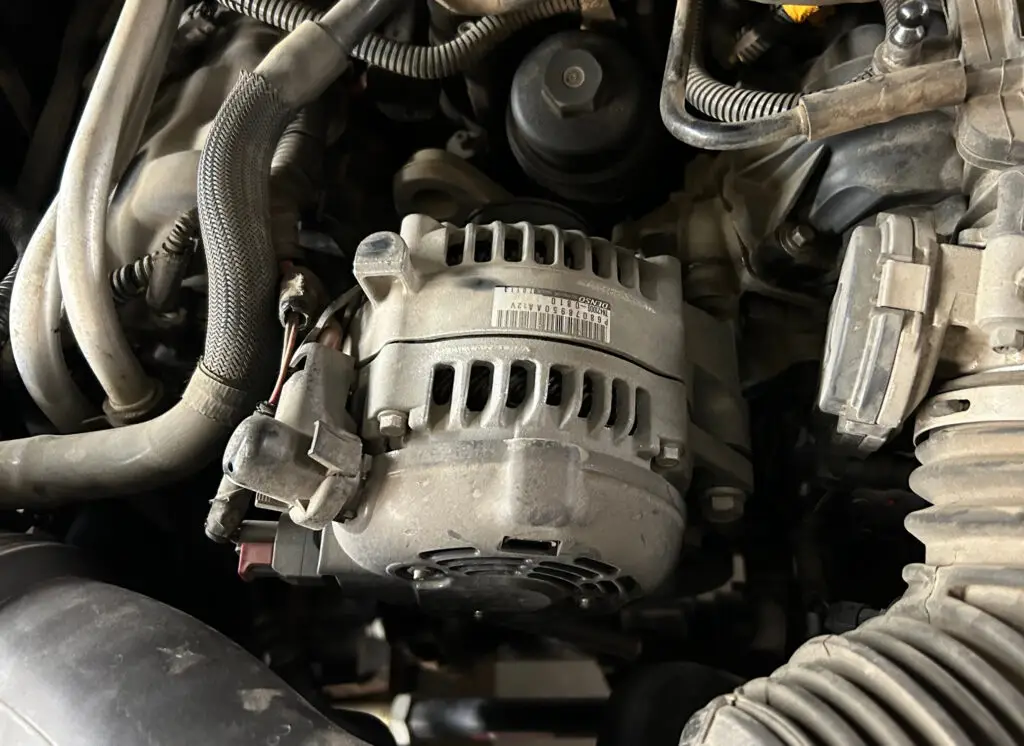
| Alternator | Supplies electrical power and recharges the battery while the engine runs. |
This guide applies mainly to conventional gasoline and diesel vehicles. Hybrids and electric vehicles may use different starting and charging equipment.
Signs of a Weak or Discharged Battery
Battery trouble often becomes noticeable when you try to start the vehicle. Common clues include:
- The engine turns over more slowly than usual.
- You hear rapid clicking.
- The lights dim significantly during a starting attempt.
- The vehicle starts after a jump but has trouble starting again later.
However, a discharged battery is not automatically a bad battery. A light left on, a charging problem, or an electrical draw while the vehicle is parked can drain an otherwise usable battery.
Loose or corroded connections can also prevent enough power from reaching the starter. Checking the connections matters just as much as checking the battery.
Why Cold Weather Makes Starting Problems More Noticeable
Cold weather reduces a battery’s available starting power while increasing the effort needed to crank the engine. A marginal battery may work on a mild afternoon and struggle on a cold Cheyenne morning.
If starting has become noticeably slower, have the battery and connections checked before you are left with a vehicle that won’t start.
Signs of a Starter Problem
The starter turns the engine. A starting-system problem may cause:
- A single click without the engine turning over.
- Intermittent starting sometimes it works, sometimes it does not.
- No cranking even though the lights and radio operate.
- Grinding during a starting attempt.
Working dashboard lights do not prove the battery is strong enough to run the starter. Starting the engine requires much more current than operating the radio.
A technician should confirm battery condition, cable performance, and the starter’s electrical command before recommending replacement. Relays, switches, wiring, and other starting-circuit components can produce similar symptoms.
If you hear grinding, stop repeated starting attempts and arrange an inspection.
Signs of an Alternator or Charging-System Problem
An alternator problem may show up while the engine is running or leave the battery too discharged for the next start.
Possible clues include:
- A battery-shaped warning light or charging-system message while driving.
- Headlights or interior lights that flicker or change brightness.
- Electrical accessories that behave unusually with the engine running.
- Repeated battery discharge.
- An engine that stalls.
The battery-shaped dashboard light generally warns about the charging system. It does not automatically mean the battery needs replacing. Wiring, connections, belt problems, and charging controls can also be involved.
If the charging warning light comes on while driving, pull over somewhere safe and arrange assistance. A vehicle with a failed charging system can stall when the battery’s remaining energy runs out.
Does a Jump-Start Tell You Which Part Is Bad?
A successful jump-start suggests that available battery power or an electrical connection may be part of the problem. It does not prove that replacing the battery will fix it.
If the vehicle needs another jump later, possible causes include:
- A battery that cannot hold an adequate charge.
- A charging system that is not replenishing the battery.
- An electrical draw while the vehicle is parked.
- Poor battery cable connections.
Follow your owner’s manual for jump-start procedures and approved connection points. Do not jump-start a battery that is frozen, swollen, leaking, or visibly damaged.
Never disconnect a battery cable while the engine is running to “test” the alternator. This outdated method can damage vehicle electronics and is not a reliable diagnostic test.
Can Truck Accessories Affect the Battery?
Truck accessories add another detail worth mentioning to your repair shop.
Winches, auxiliary lights, audio equipment, and other powered accessories place additional demands on the electrical system. Equipment that remains powered while the vehicle is parked can also contribute to battery drain.
An accessory is not automatically the cause. But if starting trouble began after an installation, tell the technician what was added and when the symptoms started.
How a Technician Finds the Cause
A useful inspection goes beyond checking whether the battery has voltage. Depending on the vehicle and symptoms, diagnosis may include:
- Inspecting battery terminals, cables, and ground connections.
- Testing battery condition and state of charge.
- Checking voltage loss through cables during cranking.
- Testing the starter circuit and starter operation.
- Checking charging performance under appropriate conditions.
- Investigating an electrical draw if the battery goes dead while parked.
Modern charging systems can vary their output. One voltage reading alone may not tell the whole story.
When you contact the shop, explain whether the engine cranks, what sound you hear, whether a jump helped, and whether the problem happens after sitting overnight or after driving.
Frequently Asked Questions
Can a bad alternator cause a dead battery?
Yes. If the charging system does not replenish the battery, it can become too discharged to start the engine. Replacing the battery alone may leave the original problem unresolved.
Can my starter be bad if the lights still work?
Yes, but working lights do not rule out a weak battery or poor connections. Testing helps distinguish between those causes.
What if the engine cranks normally but won’t start?
Normal cranking means the starter is turning the engine. Fuel delivery, ignition, security-system issues, or other engine-control problems may be preventing it from running. This calls for a broader diagnosis. AAA Automotive
Will driving recharge a dead battery?
Driving may restore some charge if the charging system works, but a short trip may not adequately recharge a deeply discharged battery. Proper charging and testing help determine whether the battery is still serviceable.
Auto Repair in Cheyenne, Wyoming
A slow start, repeated clicking, or a charging warning light deserves attention before it becomes a breakdown.
TNT Customs provides auto repair and maintenance in Cheyenne along with truck accessory services. If your car or truck is having starting problems, contact the shop to discuss the symptoms and arrange an inspection. TNT Customs
TNT Customs
807 S Greeley Hwy
Cheyenne, WY 82007
Call: (307) 775-9565
Contact TNT Customs to request an appointment.