The Critical Alignment Most Lifted Jeeps Need After Installing a Lift Kit
Installing a lift kit is one of the most popular upgrades for Jeep owners and off-road enthusiasts. A lift provides additional ground clearance, larger tire options, improved approach and departure angles, and a more aggressive stance.
However, lifting your Jeep changes much more than ride height.
When you lift a Jeep Wrangler, Gladiator, or other 4×4 vehicle, you fundamentally alter the suspension geometry. That’s why a standard alignment performed on a stock vehicle often isn’t enough. To maximize performance, handling, tire life, and safety, your lifted Jeep needs a specialized alignment tailored to its suspension setup.
At TNT Customs in Cheyenne, Wyoming, we’ve spent more than 20 years building, modifying, and servicing Jeeps. We regularly align lifted vehicles and understand how suspension modifications affect vehicle handling both on and off the trail.
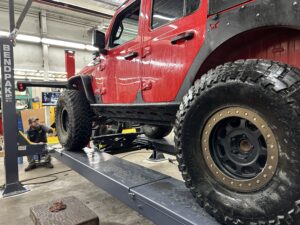
Do You Need an Alignment After Lifting Your Jeep?
Yes.
Any time you install a lift kit, replace suspension components, adjust control arms, install a track bar, or make significant steering modifications, you should have the vehicle professionally aligned.
Failing to properly align a lifted Jeep can result in:
- Uneven tire wear
- Steering wander
- Poor handling
- Reduced fuel economy
- Increased suspension wear
- Poor return-to-center steering
- Driver fatigue during highway travel
How Does a Lift Kit Change Suspension Geometry?
A lift kit changes the relationship between your suspension, steering, and axle components.
Several critical alignment angles are affected.
Caster Angle Changes
Caster is one of the most important alignment settings on a lifted Jeep.
When a vehicle is lifted, caster angle is often reduced.
What Happens When Caster Is Too Low?
Low caster can cause:
- Steering wander
- Poor straight-line tracking
- Reduced steering stability
- Weak return-to-center after turns
If your Jeep feels nervous on the highway after installing a lift, caster angle is often a major contributor.
Camber Changes
While solid axle Jeeps have limited camber adjustment compared to independent suspension vehicles, suspension modifications can still affect wheel positioning and tire contact patterns.
Improper camber can contribute to:
- Uneven tire wear
- Reduced cornering performance
- Decreased tire contact with the road
Toe Settings Change
Toe refers to the direction your tires point when viewed from above.
Even small toe changes can dramatically affect:
- Tire wear
- Steering response
- Vehicle stability
Incorrect toe is one of the leading causes of premature tire wear on lifted Jeeps.
Why a Standard Alignment Isn’t Enough
Many general repair shops perform alignments based solely on factory specifications.
The problem?
Factory specifications were developed for stock vehicles not heavily modified Jeeps running lift kits, larger tires, adjustable control arms, and aftermarket suspension systems.
Lifted Jeeps Require Specialized Knowledge
Understanding suspension geometry is critical.
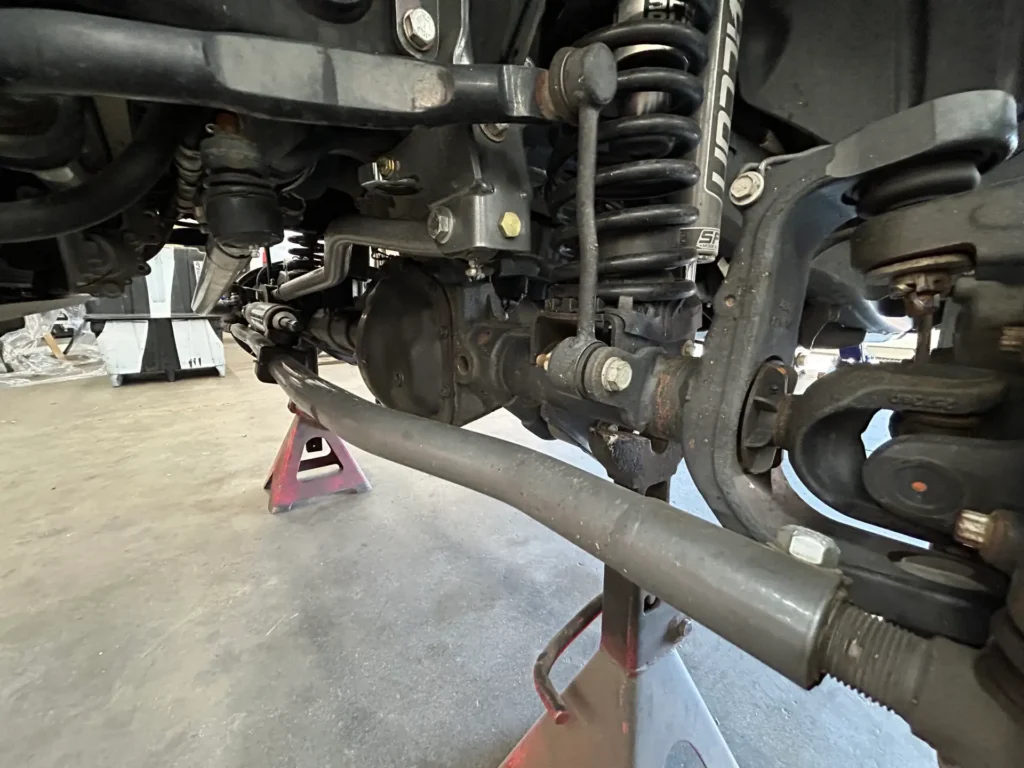
An experienced Jeep technician knows how components such as:
- Adjustable control arms
- Track bars
- Long-arm suspension systems
- Steering linkage
- Drag links
- Tie rods
work together to affect handling and alignment.
At TNT Customs, we don’t simply set numbers on a screen we evaluate how the entire suspension system functions as a package.
Benefits of a Proper Lifted Jeep Alignment
Better Highway Handling
A properly aligned Jeep tracks straighter and requires fewer steering corrections.
This reduces driver fatigue during long road trips and daily commuting.
Improved Off-Road Performance
Alignment affects how your suspension cycles and articulates.
Proper geometry helps:
- Improve traction
- Enhance suspension performance
- Reduce component stress
- Improve steering predictability on technical trails
Longer Tire Life
Off-road tires are a significant investment.
Proper alignment helps ensure:
- Even tread wear
- Longer tire lifespan
- Better fuel efficiency
- Consistent performance
Reduced Suspension Wear
When alignment angles are incorrect, steering and suspension components experience unnecessary stress.
Correct alignment helps protect:
- Ball joints
- Tie rods
- Control arm bushings
- Steering components
- Tires
Signs Your Lifted Jeep Needs an Alignment
If you’ve recently installed a lift kit or suspension upgrade, watch for these warning signs:
- Vehicle pulls left or right
- Steering wheel is off-center
- Excessive steering correction required
- Uneven tire wear
- Poor return-to-center steering
- Wandering at highway speeds
- Vibration or instability
If you notice any of these symptoms, schedule an inspection as soon as possible.
Frequently Asked Questions About Lifted Jeep Alignments
Do I need an alignment after installing a lift kit?
Yes. Any suspension modification can alter alignment angles and should be followed by a professional alignment.
Can any shop align a lifted Jeep?
Not always. Lifted Jeeps often require specialized equipment and/or technicians familiar with off-road suspension geometry.
Why does my lifted Jeep wander on the highway?
Steering wander is often caused by insufficient caster angle, improper toe settings, worn steering components, or incorrect suspension geometry.
How often should I align my lifted Jeep?
You should check alignment after installing suspension components, after significant off-road use, or anytime you notice handling changes or uneven tire wear.
Do larger tires affect alignment?
Larger tires don’t directly change alignment angles, but they can magnify handling issues caused by improper alignment.
Will adjustable control arms improve alignment?
Yes. Adjustable control arms allow technicians to restore proper caster and axle positioning after a lift, helping optimize handling and ride quality.
Read More about adding an Adjustable Track Bar and Control Arms to help maximize your Lift.
Why Trust TNT Customs With Your Lifted Jeep?
For more than two decades, TNT Customs has been designing, manufacturing, building, and servicing Jeeps and off-road vehicles.
Our team understands the unique challenges that lifted vehicles present because we don’t just work on them—we build them.
From suspension upgrades and long-arm systems to steering corrections and custom alignments, we help Jeep owners get the most from their investment both on the road and on the trail.
Whether you’re running a mild lift or a fully built trail rig, our experienced technicians can help ensure your suspension geometry is optimized for performance, safety, and reliability.
Maximize the Performance of Your Lifted Jeep
Installing a lift kit is only the first step.
To fully unlock the benefits of your suspension upgrade, your Jeep needs a professional alignment designed specifically for lifted vehicles.
Schedule an alignment inspection with TNT Customs and let our Jeep experts help you get the most out of your build.
TNT Customs
807 S. Greeley Highway
Cheyenne, Wyoming
Master Your Terrain—On the Trail and On the Road.