Common Causes, Warning Signs, and How to Prevent It
If you’ve noticed one tire wearing faster than the others or strange wear patterns across your tread, you’re not alone. Uneven tire wear is one of the most common issues vehicle owners face, and it can lead to poor handling, reduced fuel economy, and premature tire replacement.
The good news? Uneven tire wear usually points to an underlying issue that can be diagnosed and corrected before it becomes a costly repair.
At TNT Customs, we help drivers identify the root causes of tire wear and keep their vehicles running safely on and off the road.
Quick Answer: What Causes Uneven Tire Wear?
Uneven tire wear is most commonly caused by:
- Improper tire inflation
- Poor wheel alignment
- Worn suspension components
- Unbalanced tires
- Failure to rotate tires regularly
- Damaged steering components
- Aggressive driving habits
- Overloading the vehicle
Identifying the wear pattern can help determine the exact cause.
Why Uneven Tire Wear Matters
Tires are the only part of your vehicle that touches the road. When they wear unevenly, it can affect:
- Vehicle handling
- Braking performance
- Fuel efficiency
- Ride comfort
- Tire lifespan
- Safety in wet, snowy, or icy conditions
Ignoring uneven wear can lead to expensive tire replacements and additional suspension or steering repairs.
Common Tire Wear Patterns and What They Mean
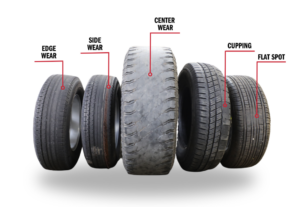
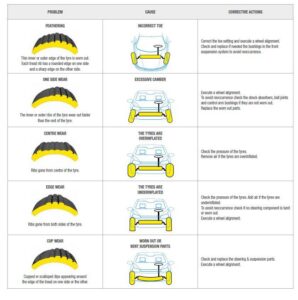
Center Tire Wear
If the center of the tread wears faster than the edges, the tire is likely overinflated.
Cause:
- Excessive tire pressure
Solution:
- Adjust tire pressure to the manufacturer’s recommended PSI.
Edge Wear on Both Sides
When both outer edges wear faster than the center, the tire is underinflated.
Cause:
- Low tire pressure
Solution:
- Check tire pressure regularly and inflate to the proper specification.
Inner or Outer Edge Wear
If only one side of the tire is wearing excessively, it usually indicates an alignment issue.
Cause:
- Improper camber or toe settings
- Suspension issues
Solution:
- Schedule a wheel alignment inspection.
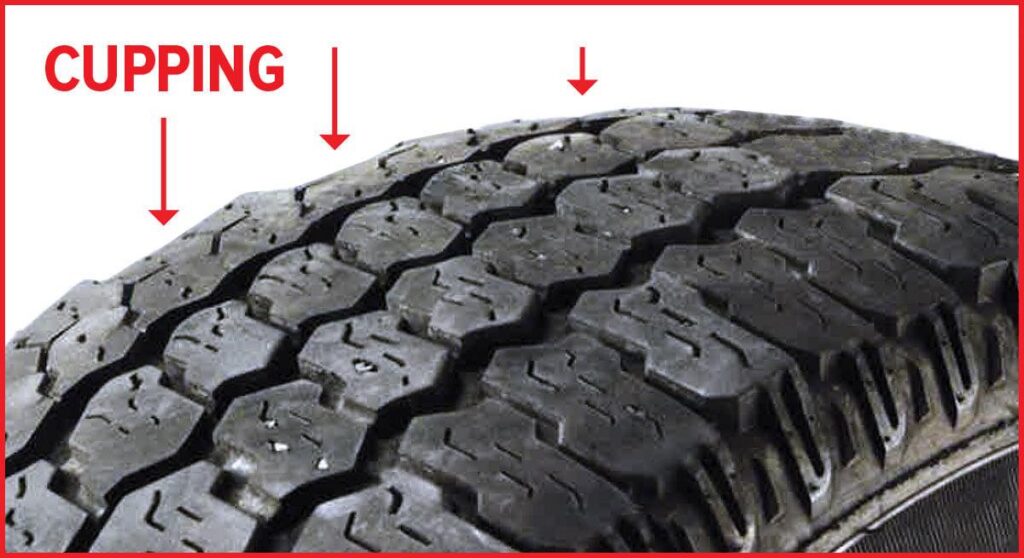
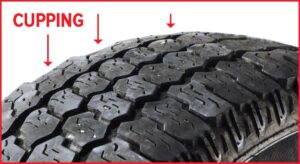
Cupping or Scalloping
Cupping appears as dips or scalloped sections around the tire tread.
Cause:
- Worn shocks or struts
- Suspension problems
- Tire imbalance
Solution:
- Inspect suspension components and balance tires.
Feathering
Feathering occurs when tread blocks feel smooth on one side and sharp on the other.
Cause:
- Incorrect toe alignment
Solution:
- Perform a wheel alignment.
How Wheel Alignment Affects Tire Wear
Wheel alignment refers to the angles at which your tires contact the road. Even slight misalignment can cause tires to scrub against the pavement rather than roll smoothly.
Common signs of alignment problems include:
- Vehicle pulling left or right
- Crooked steering wheel
- Uneven tread wear
- Reduced fuel economy
Off-road driving, potholes, curbs, and rough roads can all knock a vehicle out of alignment.
Can Worn Suspension Parts Cause Uneven Tire Wear?
Absolutely.
Suspension components help keep your tires planted evenly on the road. When parts wear out, tire contact changes, creating abnormal wear patterns.
Common culprits include:
- Ball joints
- Tie rod ends
- Control arm bushings
- Shocks
- Struts
- Wheel bearings
Vehicles used for towing, hauling, or off-roading often place additional stress on suspension components.
The Importance of Tire Rotation
Front and rear tires wear differently due to steering, braking, and weight distribution.
Failing to rotate tires regularly can cause:
- Uneven tread depth
- Increased road noise
- Reduced tire life
Most manufacturers recommend rotating tires every 5,000 to 8,000 miles, often during routine oil changes.
How Tire Pressure Impacts Tire Wear
Tire pressure changes with temperature fluctuations throughout the year.
In colder weather:
- Tire pressure decreases.
In warmer weather:
- Tire pressure increases.
Driving on improperly inflated tires can quickly create uneven wear patterns and reduce tire life.
Check tire pressure at least once a month and before long trips.
How Often Should You Inspect Your Tires?
Perform a visual tire inspection:
- Monthly
- Before road trips
- After off-road adventures
- Whenever handling feels different
Look for:
- Uneven tread wear
- Cracks or cuts
- Bulges
- Embedded objects
- Low tread depth
Early detection can prevent larger repair bills later.
When to Visit a Repair Shop
If you notice uneven tire wear, don’t wait until the tire becomes unsafe.
A professional inspection can identify:
- Alignment issues
- Suspension wear
- Tire balance problems
- Steering component damage
Correcting the underlying issue often saves the remaining life of the tire and prevents additional damage.
Trust TNT Customs for Tire and Suspension Inspections
Whether you drive a daily commuter, work truck, Jeep, or off-road rig, proper tire wear is essential for safety and performance.
At TNT Customs, our experienced technicians can inspect your tires, suspension, steering components, and alignment-related concerns to help you get the most life out of your tires and keep your vehicle handling properly.
Stop by TNT Customs at 807 S. Greeley Highway in Cheyenne, Wyoming, or contact us to schedule an inspection.
Frequently Asked Questions About Uneven Tire Wear
What is the most common cause of uneven tire wear?
Improper wheel alignment is one of the most common causes of uneven tire wear. Incorrect tire pressure and worn suspension parts are also frequent contributors.
Can bad shocks cause uneven tire wear?
Yes. Worn shocks or struts can cause cupping or scalloping patterns on the tire tread because the tire bounces excessively instead of maintaining consistent contact with the road.
Does tire balancing affect tire wear?
Yes. Unbalanced tires can create vibration and uneven tread wear over time. Regular balancing helps extend tire life and improve ride quality.
How often should tires be rotated?
Most vehicles should have their tires rotated every 5,000 to 8,000 miles or according to the manufacturer’s maintenance schedule.
Can off-roading cause uneven tire wear?
Yes. Off-road driving can accelerate tire wear and affect alignment, especially after impacts with rocks, ruts, or obstacles. Regular inspections are recommended for off-road vehicles.
Is uneven tire wear dangerous?
It can be. Unevenly worn tires may reduce traction, increase stopping distances, affect handling, and increase the risk of tire failure.
How do I know if I need an alignment?
Signs include uneven tire wear, the vehicle pulling to one side, a crooked steering wheel, or steering that feels unstable.