Essential Gear Everyone Should Keep in Their Vehicle
Weather can change fast whether you’re commuting across town or cruising deep into the mountains. Snowstorms, sudden temperature drops, flash floods, extreme heat, breakdowns, and unexpected delays can leave anyone stranded. Having the right emergency gear in your vehicle is one of the smartest ways to protect yourself and your passengers.
This all-in-one list covers the 9 essential categories of emergency gear every driver should carry — whether you’re an everyday motorist or a backcountry adventurer.
Warmth, Shelter and Insulation
Staying warm is the #1 priority if you’re stuck in cold weather.
Insulated Sleeping Bag: A high-quality, cold-weather rated sleeping bag is your first line of defense against hypothermia. Look for bags rated to at least -20°F (-29°C) to ensure you stay warm in extreme conditions.
Emergency Blankets: Pack several emergency blankets, also known as space blankets. These lightweight, compact sheets reflect up to 90% of your body heat, providing crucial warmth in survival situations.
Extra Clothing Layers: Always carry additional warm, moisture-wicking layers. Include thermal underwear, fleece jackets, waterproof outer layers, extra socks, gloves, hat and insulated boots.
These items help prevent hypothermia, even if your vehicle won’t start.
Fire Starter Kit
If you camp, wheel, or travel far from town, fire tools are smart to carry:
Fire Starter Kit: A reliable fire starter kit is essential. Include waterproof matches, a lighter, and a ferrocerium rod. Consider adding some fire-starting tinder for quick ignition in wet conditions.
Everyday drivers do not need this category, but for wilderness explorers, it’s an essential.
Light
Headlamp and Flashlights: Pack a headlamp and at least one powerful flashlight with extra batteries. LED models offer long battery life and bright illumination. A flashlight or headlamp is crucial for visibility, signaling for help, and assessing vehicle issues especially during storms or winter darkness.
Food and Water
Whether you’re waiting for a tow truck or stuck overnight in a remote area, food and water make a huge difference.
High-Energy Food: Stock up on non-perishable, high-calorie foods like energy bars, nuts, and dried fruits. These provide essential nutrients and energy in emergency situations.
Water and Purification: Carry more water than you think you’ll need. Include a water purification system like filters or tablets to make snow or found water safe for consumption.
Store items that won’t freeze, spoil, or melt easily.
Vehicle Recovery
Recovery/Traction Boards: These boards provide immediate traction under tires that are spinning in snow or mud, helping to get your vehicle moving again.
Portable Air Compressor: A compact air compressor allows you to reinflate tires after lowering pressure for better traction in snow or mud.
Recovery Straps and Shackles: A robust recovery kit with straps, shackles, and a snatch block is essential for vehicle extraction.
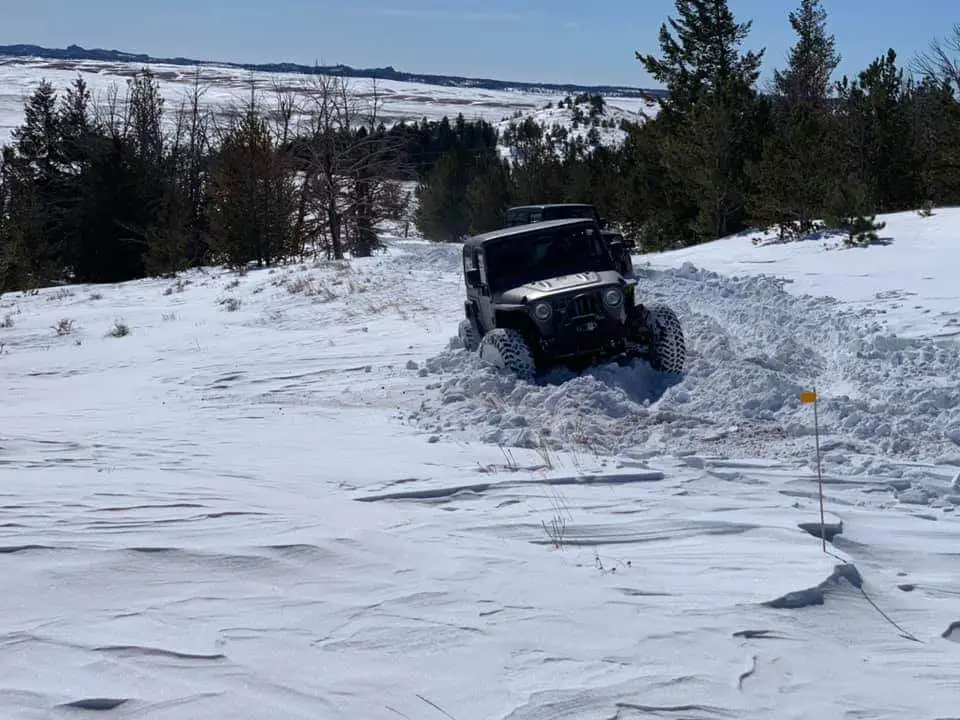
Winch: A winch can be a game-changer for self-recovery in deep snow or difficult terrain, especially when traveling solo.
Tools and Repairs
Basic Tool Kit: Carry a comprehensive tool kit for vehicle repairs. Include wrenches, sockets, pliers, and screwdrivers specific to your vehicle.
Tire Repair Kit: A quality tire repair kit can help you fix punctures on the trail, potentially avoiding a dangerous situation.
Tire Deflator: A tire deflator allows you to reduce tire pressure for better traction in snow. Look for adjustable models that let you set specific PSI levels.
Chainsaw or Handsaw: Useful for clearing fallen trees or obstacles from your path, ensuring you can navigate around blockages safely.
Shovel: A compact, foldable shovel is invaluable for digging out snow or debris when stuck. Both flathead and pointed types have their uses depending on the situation.
First Aid
Comprehensive First Aid Kit: Choose a first aid kit designed for outdoor adventures, containing supplies for treating injuries and illnesses in remote locations.
Roadside Safety
Emergency Signaling Devices: Pack LED flares, High-visibility vest, reflective triangles, a whistle, and a signaling mirror to attract attention in case of emergency.
Fire Extinguisher: An essential safety item, especially when dealing with fuel and potential fire hazards during repairs or emergencies.
Extra Fuel Containers: Carrying extra fuel ensures you won’t run out during long trips in remote areas where gas stations are scarce.
Portable Power Bank
A fully charged power bank ensures you can call for help even if your vehicle battery dies. Cold weather drains phone batteries quickly, so keep this item easily accessible.
Bonus Items: Communication and Navigation
Emergency Radio: A hand-crank emergency radio with NOAA weather alerts keeps you informed of changing conditions.
Satellite Communicator: In remote areas where cell service is unreliable, a satellite communicator can be a lifesaver. These devices allow you to send SOS signals and communicate your location to emergency services.
Prepared Drivers Are Safer Drivers
Whether you’re commuting through town, traveling across Wyoming, or exploring backcountry trails, these nine emergency-gear categories will help keep you safe, warm, fed, and visible until help arrives.
A small kit in your trunk can:
✔ Save your battery
✔ Keep you warm
✔ Help you get unstuck
✔ Provide light and visibility
✔ Help you stay calm and prepared
If you need help choosing gear or preparing your vehicle for winter or adventure season, the team at TNT Customs is always here to help you Master Your Terrain.
By ensuring you have these essential items in your winter off-roading emergency kit, you’ll be well-prepared to handle unexpected situations and stay safe during your cold-weather adventures. Remember, proper preparation is key to enjoying the great outdoors responsibly.