When it comes to keeping your vehicle running smoothly, one maintenance item that often gets overlooked is wheel alignment.
Working inside a 4×4 shop, we know that alignment issues are one of the most common and most preventable causes of premature tire wear and steering problems. Especially here in Wyoming, where potholes, frost heaves, curbs, and off-road trails are part of daily life.
Let’s break down what wheel alignment really is, why it matters, how often you should check it, and what actually happens when you ignore it.
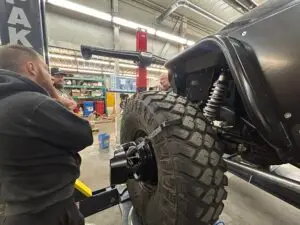
What Is Wheel Alignment? (Simple Definition)
Wheel alignment is the adjustment of your suspension angles so your tires contact the road at the correct angle.
It does not adjust the tires themselves it adjusts the suspension geometry that controls how the tires sit.
Alignment focuses on three primary angles:
- Camber – The inward or outward tilt of the tire when viewed from the front.
- Caster – The forward or backward tilt of the steering axis.
- Toe – The direction the tires point relative to each other (inward or outward).
When these angles fall outside manufacturer specifications, your vehicle doesn’t track properly and that’s when problems begin.
Quick distinction:
Tire balancing distributes weight evenly.
Wheel alignment corrects suspension angles.
Two very different services.
Why Wheel Alignment Is Important
1. Prevents Uneven Tire Wear
Misalignment causes irregular wear patterns such as:
- Inside or outside edge wear
- Feathering across tread blocks
- Cupping
Once uneven wear starts, it cannot be reversed only slowed down.
At TNT Customs, we’ve seen firsthand how alignment issues can cut tire life in half. That’s not a small expense.
2. Improves Handling and Steering Control
If your vehicle pulls left or right, feels loose, or your steering wheel sits off-center while driving straight, alignment is often the culprit.
For lifted Jeeps or vehicles with suspension modifications, proper alignment becomes even more critical. Changes in ride height directly affect caster and toe settings.
Misalignment affects:
- Steering stability
- Straight-line tracking
- High-speed control
- Wet and winter road safety
3. Protects Suspension and Steering Components
When alignment angles are off, stress transfers to:
- Tie rods
- Ball joints
- Control arms
- Wheel bearings
Over time, this leads to premature wear.
Alignment isn’t just about tires, it’s about preserving the entire steering system.
4. Supports Better Fuel Efficiency
When your wheels are misaligned, the tires create additional rolling resistance.
More resistance = more engine effort = more fuel consumed.
While alignment won’t suddenly double MPG, proper geometry ensures your vehicle rolls efficiently instead of dragging sideways down the road.
How Often Should You Get a Wheel Alignment?
There isn’t a universal rule, but at TNT Customs we’ve seen these practical guidelines work well for most vehicles:
General Recommendation:
Every 6,000–10,000 miles
(Especially if you rotate tires regularly.)
Definitely Get an Alignment If:
- You hit a pothole, curb, or road debris
- You’ve gone off-roading
- You install new tires
- You install suspension components or lift kits
- Your steering wheel is off-center
- You notice uneven tire wear
- The vehicle pulls to one side
For Jeep owners and off-roaders:
Trail impacts and articulation absolutely shift alignment over time even if nothing feels “wrong” yet.
What Happens If You Skip Wheel Alignment?
Neglecting alignment leads to:
- Premature tire replacement
- Reduced steering control
- Increased stopping distance
- Worn steering and suspension components
- Higher fuel consumption
Alignment is a relatively low-cost service compared to:
- Replacing a full set of tires
- Rebuilding steering components
- Replacing worn ball joints or tie rods
At TNT Customs we’ve seen minor alignment issues turn into expensive repairs simply because they were ignored too long.
How Modern Alignment Systems Improve Accuracy
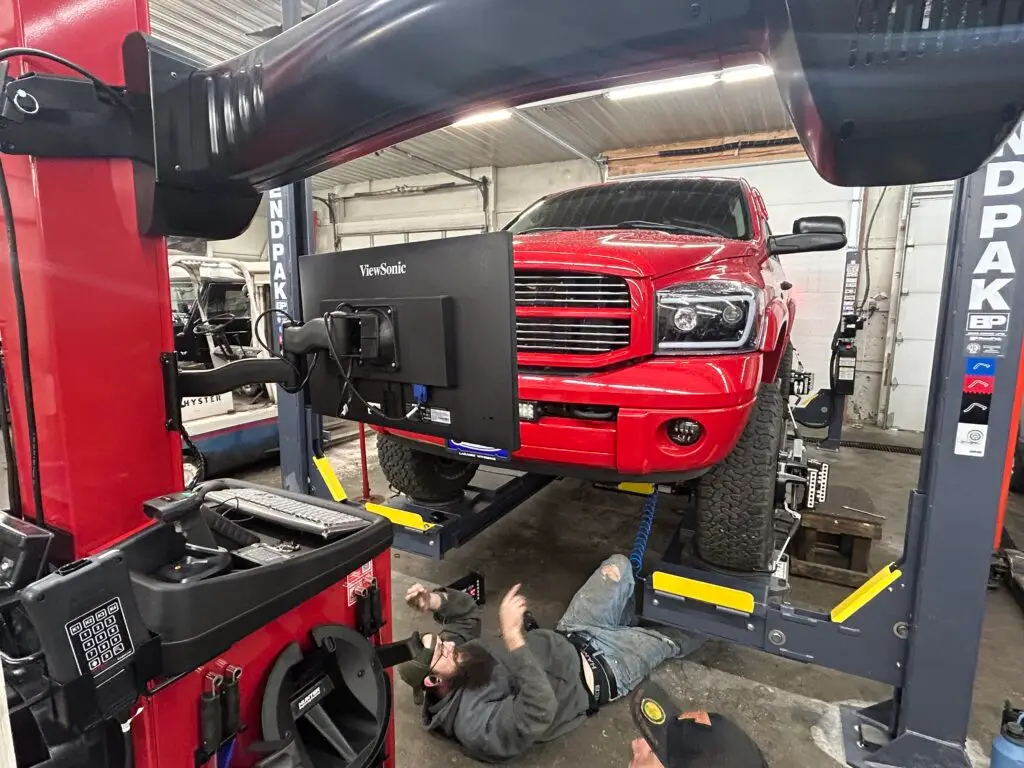
At TNT Customs, technicians use the Hawkeye Elite Alignment System, which uses high-resolution imaging sensors to measure suspension angles with extreme precision.
Working with this system we see how small the tolerances really are. Even a fraction of a degree outside spec can affect handling and wear patterns over thousands of miles.
Modern systems allow technicians to:
- Measure before-and-after specs
- Adjust to manufacturer targets
- Account for lifted or modified vehicles
- Ensure steering wheel centering
For modified Jeeps, this level of accuracy matters even more.
Wheel Alignment FAQs
How do I know if my car needs a wheel alignment?
Common signs include:
- Vehicle pulling to one side
- Uneven tire wear
- Crooked steering wheel while driving straight
- Steering wheel vibration
- Loose or wandering steering feel
If you notice any of these, it’s worth having it checked.
Can driving with bad alignment damage my car?
Yes. Long-term misalignment accelerates tire wear and places strain on suspension and steering components. Over time, this can lead to costly repairs.
Does hitting a pothole mess up alignment?
Absolutely. A hard pothole or curb impact can knock toe or camber out of specification instantly. If the steering feels different afterward, get it checked.
Do lifted Jeeps need more frequent alignments?
Often, yes. Suspension geometry changes with lift kits. Larger tires also place additional stress on steering components. Regular alignment checks help preserve handling and tire life.
Is wheel alignment the same as tire balancing?
No.
- Alignment adjusts suspension angles.
- Balancing distributes tire weight evenly.
They solve different problems.
How long does a wheel alignment take?
Typically 45–90 minutes, depending on vehicle condition and whether components are seized or worn.
Final Thoughts
Wheel alignment isn’t flashy. It’s not as exciting as new tires or suspension upgrades.
But it’s foundational.
It protects your tires.
It protects your steering components.
It improves handling and safety.
After years of 4×4 shop experience it’s one of the smartest preventative maintenance services you can schedule.
If your vehicle feels “off” in any way, don’t ignore it. Alignment issues rarely fix themselves.